Nationalism is an ideology, according to Encyclopedia Britannica, that is “based on the premise that the individual’s loyalty and devotion to the nation-state surpass other individual or group interests.” In recent years, the term Nationalism has been used to describe right-wing movements that have focused on putting the interests of its citizens first. Regardless of whether or not this country first ideology is beneficial or not, right-wing populist movements have risen in America and across Europe over the past few years. In Ukraine, nationalism and nationalist parties have not received large representation in national politics, although they have been elected to smaller percentages of the legislative branch in recent years. The All-Ukrainian Union, also known as Svoboda or “Freedom” in English, is a nationalist party in Ukraine. After being often described as an “anti-Semitic” and “pro-Nazi” party in the early years following it’s conception, the party rebranded itself as a slightly more moderate party in the early 2000’s. Although it’s politics still remain far-right, it is now more often described as being a more radical nationalist group, rather than a racist group. Much of the parties success came in 2012, when it won 38 seats in the Ukrainian Parliament. The party has seen much less success in the years following, losing all but 6 seats in Parliament in the 2014 election. Ukrainian Nationalist parties have not seen much growth since then, as the public image of Svoboda and Nationalist politics as a whole has decreased.

In Chapter 2 of Zakaria’s The Post-American World, he claims that as economic prosperity increases worldwide, nationalism does as well (Zakaria 34-35). The danger of nationalism as seen by Zakaria is that as countries grow and prosper due to globalization, they will then turn away from the very same ideology that brought them that wealth. Blaming other nations for your own nations problems does not benefit a global society that is dependent on nations being able to relate well with others. This problem is the main danger Zakaria sees in nationalism.
Ukraine has had it’s fair share of conflicts in dealing with ethnic groups. One of the main problems Ukraine has run into is it’s relation with the percentage of its population that speaks Russian. The issue is not in giving these people civil rights or a question of regional legitimacy, it is how the Russian government relates to this population. Russian President Vladimir Putin has made numerous threats and claims that the Russian government will do everything in their power to protect the Russian speaking population of Ukraine. These claims became truth when Russia forcibly annexed Crimea in 2014, a province that has a considerable amount of Russian speakers comparative to the rest of Ukraine. The conflicts with Russia over the Russian speaking population in Ukraine, has proven to be a great challenge to overcome.
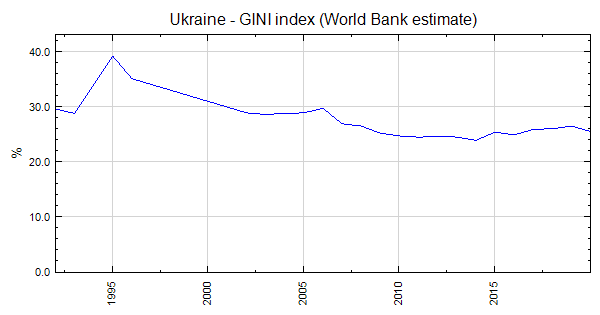
Inequality is not as big of an issue in Ukraine as it is in other countries, but there are some concerns. In terms of income inequality, Ukraine scores fairly impressively, ranking next to many Scandinavian countries with a GINI coefficient of 25.5. For reference, a coefficient of 0 means a country is perfectly equal in income, while a coefficient of 100 means total income inequality. Sweden, a country well known for its socialist policies and very equal income has a coefficient of 24.9. In the sense of income, Ukraine has a very equal population. However, as Ukraine grows there has been a widening gap between rural and urban citizens. According to the World Bank, Ukraine ranks “around average for Eastern European countries” when comparing inequality between rural and urban areas. The growth of cities is not reflected in the rural areas of Ukraine, where education has staggered and citizens are not able to have the same skills necessary to succeed in an increasingly globalized world. The World Bank reports that by “closing spatial disparities…ensuring people have the necessary human capital to succeed…and providing greater access to opportunities” will lead to a more equal growth when comparing the rural areas to the urban areas of Ukraine. While Ukraine is one of the more equal countries economically, it must continue to make progress to insure it is able to maintain that position as it’s economy and society grows.
Sources Cited
https://www.britannica.com/topic/nationalism
https://www.cia.gov/library/publications/the-world-factbook/rankorder/2172rank.html
https://www.bbc.com/news/world-europe-26468720
The Post-American World by: Fareed Zakaria
 Globalization 3510W